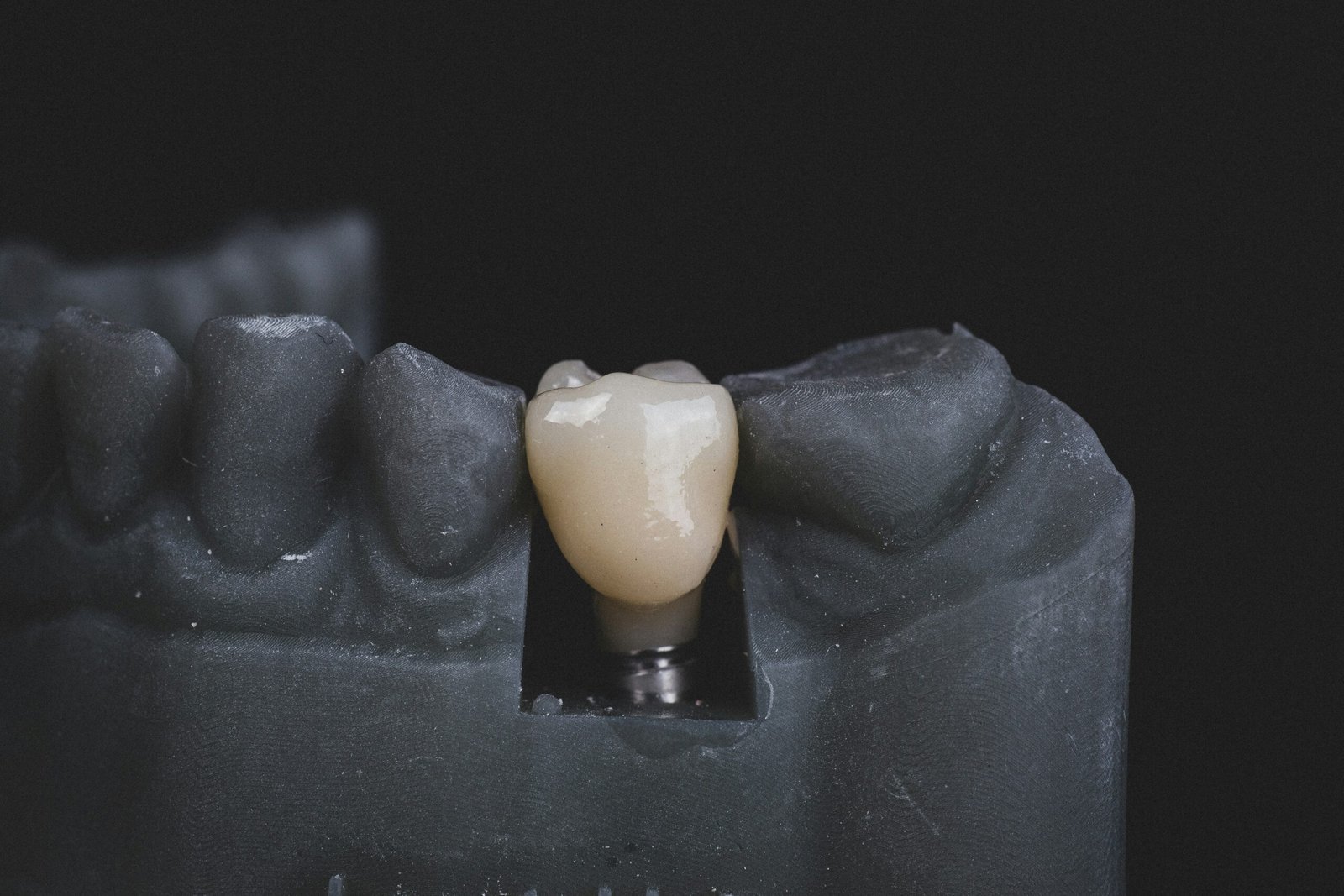
Dental implants are a modern and long-lasting solution to replace one or more missing teeth. They provide optimal comfort, perfect functionality, and a natural aesthetic result.
At the practice, implants are placed by Dr. Simon Perrin and Dr. Philippe Kayasseh.
Single implant
When a single tooth is missing, two options are available:
- Placement of a dental implant: a titanium artificial root is integrated into the bone to support a perfectly adapted crown.
- Placement of a bridge: if adjacent teeth are already damaged, a bridge may be proposed as an alternative.
After implant placement, a healing period is required to ensure proper osseointegration before the prosthesis is fitted.
Multiple implants
In cases of several missing teeth, it is not always necessary to place one implant per missing tooth.
We prefer strategic implants connected by an implant-supported bridge, restoring the maximum number of teeth with the minimum number of implants while ensuring strength and aesthetics.
In the case of full-arch replacement, fewer implants are placed than the number of missing teeth. The goal is to restore the entire arch with an implant-supported bridge. In the maxilla (upper arch), between 4 and 8 implants are placed to replace the 12 teeth normally present. In the mandible (lower arch), between 4 and 6 implants are placed to replace the 12 teeth normally present.
Implants in the aesthetic zone
Visible teeth such as incisors or canines require special attention.
We use advanced technologies to:
- Guarantee a natural aesthetic outcome (shape, color, gum harmony).
- Provide optimal functionality for daily comfort.
Bone grafting: the foundation of a strong implant
For some patients, implant placement requires bone volume augmentation to ensure a stable and durable fixation.
Different bone grafting techniques:
- Guided bone regeneration: stimulates bone growth in deficient areas.
- Allogeneic grafts: using safe, treated human bone.
- Autogenous grafts: bone harvested from the patient for optimal integration.
- Sinus lift: raising the sinus floor to allow implant placement in the posterior maxilla when the sinus is too close.
Our team always favors the least invasive and most reliable technique to minimize risks and ensure rapid healing.
Personalized support
At every stage of treatment, our experienced team strives to:
- Clearly explain all available options.
- Ensure maximum comfort and total safety.
- Deliver aesthetic and functional results perfectly tailored to your needs.


